
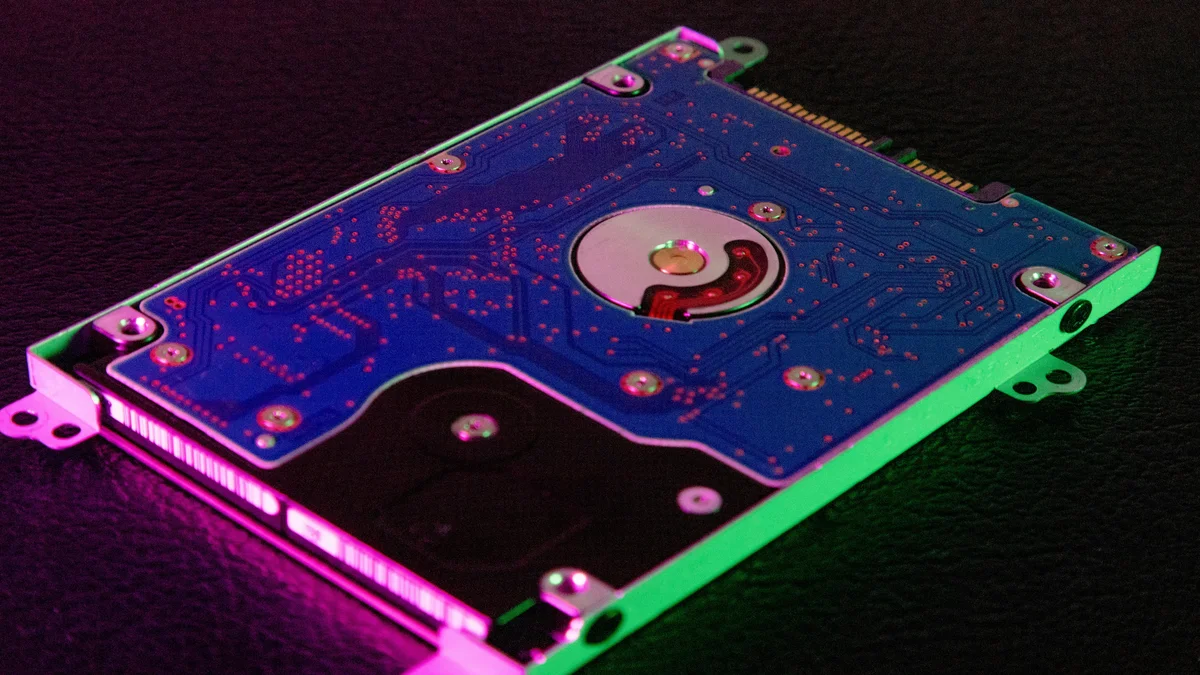
Gigabyte has intensified competition in the high-end graphics card segment with a strategic reveal of its AORUS flagship RTX 5090 variant at CES 2026, signaling the Taiwanese manufacturer's commitment to capture performance-focused consumers in the professional and gaming markets.
The announcement, delivered through official teaser campaigns, underscores the broader competitive dynamics emerging around NVIDIA's Blackwell architecture as third-party board partners craft differentiated solutions for an increasingly sophisticated user base.
The AORUS Master RTX 5090 represents Gigabyte's flagship positioning within the RTX 50-series ecosystem. Powered by the NVIDIA Blackwell architecture, the card integrates 32 GB of GDDR7 memory across a 512-bit interface, delivering 1,792 GB/s of memory bandwidth.
The specifications underscore technical parity with NVIDIA's reference design while emphasizing engineering distinctions in thermal management and power delivery. The core operates at 2,655 MHz—a 248 MHz boost relative to NVIDIA's 2,407 MHz reference clock—positioning the card within the overclocked segment of third-party implementations.
Gigabyte's cooling solution, designated WINDFORCE, employs triple 310 mm Hawk fans configured with a specialized aerodynamic blade design inspired by avian wing mechanics. The central fan rotates clockwise while outer units counter-rotate, reducing turbulence and noise signature.
According to Gigabyte's engineering specifications, the design achieves a 53.6% increase in air pressure and 12.1% improvement in airflow volume relative to conventional dual-fan architectures. Supporting the fan assembly is a vapor chamber with 13 copper nickel-plated heat pipes, establishing direct contact with the GPU die while utilizing aluminum spacers for memory module cooling.youtube
The thermal design philosophy extends to power delivery, with the card requiring a single 16-pin connector and 1,000 W recommended power supply rating—marginally elevated relative to NVIDIA's reference guidance but reflective of the elevated core clock. During independent testing, the AORUS Master consumed approximately 496 watts at 2,890 MHz boost clock under performance bias configuration.
Comparative thermal analysis reveals the card maintained temperatures 2 degrees Celsius cooler than competing MSI Supreme offerings and 8 degrees cooler than NVIDIA's Founders Edition under identical test conditions, while achieving 17 degrees warmer operation than liquid-cooled competitors when measured under standard noise conditions.youtube
Structural specifications reveal a 360 mm length across 150 mm width and 75 mm depth, occupying 3.7 expansion slots—representing a marginal increase relative to previous-generation flagships.
This dimensional profile accommodates compatibility with most modern tower configurations while maintaining the visual prominence expected from a premium product tier. Connectivity provisions include three DisplayPort 2.1b outputs and a single HDMI 2.1b interface, supporting up to four simultaneous displays at maximum resolution of 7,680 by 4,320 pixels.
The RTX 5090 platform derives performance from 21,760 CUDA cores distributed across 170 streaming multiprocessors, complemented by fourth-generation ray tracing cores and fifth-generation tensor cores optimized for AI-accelerated workloads.
Integration of DLSS 4 technology enables multi-frame generation capabilities, allowing the GPU to synthesize up to three additional frames between traditionally rendered frames through algorithmic interpolation. This feature delivers theoretical frame rate multipliers exceeding 8x in supported applications, though actual performance gains depend upon game implementation and scene complexity.
Market positioning reflects escalating differentiation within the RTX 5090 segment. NVIDIA's reference Founders Edition established $1,999 pricing upon January 30, 2025 release, while partner implementations—including Gigabyte's offerings—command premium pricing reflecting augmented cooling, enhanced power delivery, and aesthetic customization.
The broader competitive landscape encompasses similarly-positioned solutions from ASUS, MSI, and specialist manufacturers, each articulating distinct thermal and acoustic engineering approaches to address thermal constraints of the 575-watt GPU.
Gigabyte's CES 2026 presentation coincides with intensified competitive activity within the AIB (add-in board) market, where manufacturers differentiate through both hardware innovation and software ecosystem integration.
The AORUS brand positioning, historically associated with gaming-focused aesthetics and performance tuning, aligns the RTX 5090 variant with enthusiast consumer segments willing to invest premium capital for measurable thermal and frequency advantages.
Availability through established retail channels indicates standard market distribution, with pricing established through partner retailer networks across geographic regions.
The RTX 5090 segment remains supply-constrained relative to mid-range alternatives, reflecting manufacturing limitations and elevated component costs associated with advanced memory technology and sophisticated power delivery subsystems.
Technical capabilities position the RTX 5090 for professional applications including AI model inference, scientific computing, and complex 3D rendering workflows, alongside gaming applications demanding maximum frame rates and resolution fidelity.
The extended memory capacity—32 GB versus 24 GB in the preceding RTX 4090—enables larger model loading and higher-resolution texture processing, delivering material advantages in production environments.